Marine Ecology
In 2025, Interface gathered a small team to explore the complexities and environmental impact of the industrialisation of our oceans. This project was been initiated in response to a call out by IMMA Earth Rising, and was developed for a manifestation at the festival in September 2025.
Laney Mannion | Jane Cassidy | Marie Louise Heffernan | Alannah Robins
In urgent times, many of us are tempted to address trouble in terms of making an imagined future safe, of stopping something from happening that looms in the future, of clearing away the present and the past in order to make futures for coming generations. Staying with the trouble does not require such a relationship to times called the future. In fact, staying with the trouble requires learning to be truly present, not as a vanishing pivot between awful or Edenic pasts and apocalyptic or salvific futures.”[1]
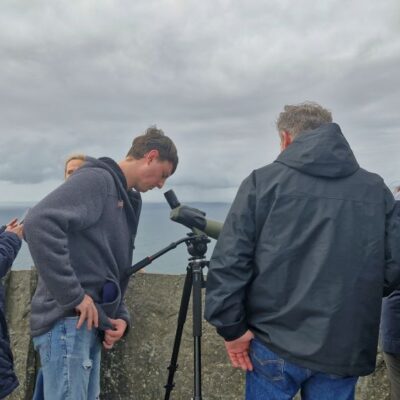
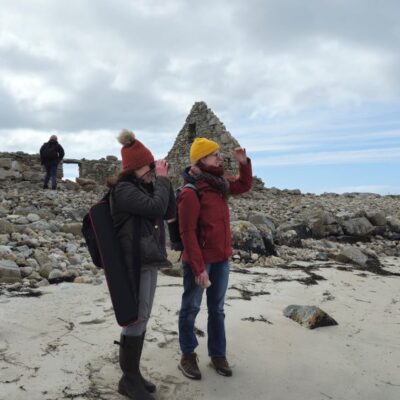
Ireland stands at a pivotal moment in its relationship with the ocean. The first phase of offshore wind development is currently in the planning process, marking the beginning of large-scale industrialization of our seas. One windfarm, proposed for the Sceirde Rocks on the Connemara coast is the subject of this project.
The goal is to provide a clean, secure energy source that will help Ireland generate 80% of its electricity from renewables by 2030. The proposed wind farm will have a capacity of 450 MW. It will consist of 30 turbines, with a tip-height of 325m, rotary size 292m, fixed to the ocean bed, in places 5km from the Connemara coast. Once constructed, the windfarm will provide enough clean energy to power over 350,000 homes, avoiding CO2 emissions equivalent to removing 180,000 petrol cars from Ireland’s roads.
Climate action is essential, however, it cannot come at the expense of biodiversity loss. There is currently no nuance in the conversation, we are sacrificing all our current wealth in order to reach climate goals and ‘...our task is to make trouble.’
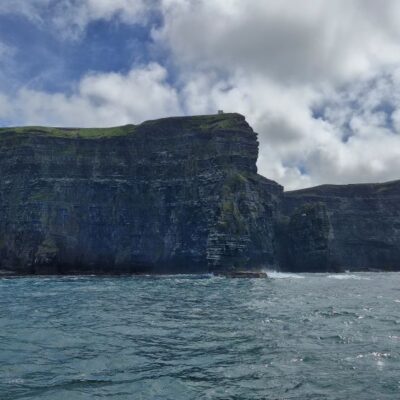
Our terrestrial habitats are already in crisis, with 84% in unfavourable condition - we cannot afford to repeat the same mistakes offshore. Ireland’s seas and seabirds are the jewel in our biodiversity crown, and their protection must be central to any development strategy.
[1] Haraway, D. J. (2016). Staying with the trouble. Duke University Press. Introduction p.1
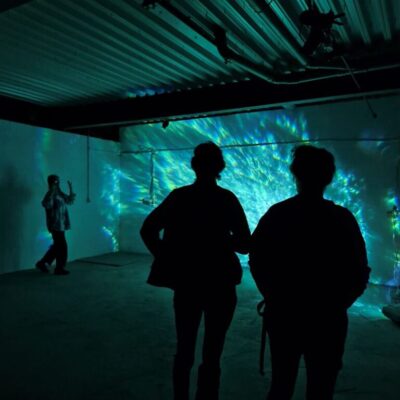
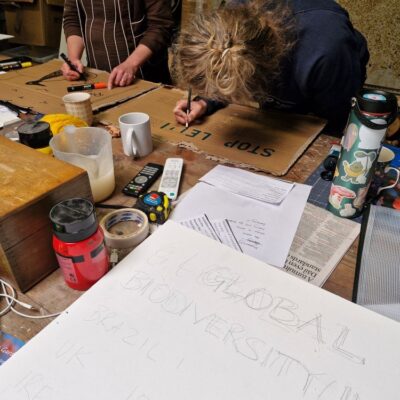
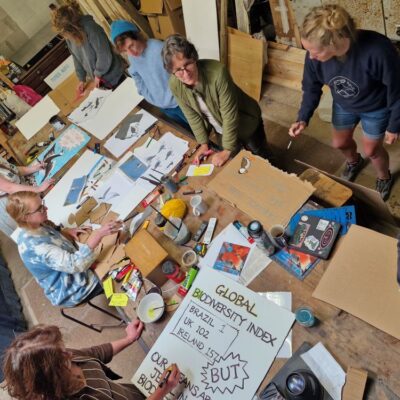
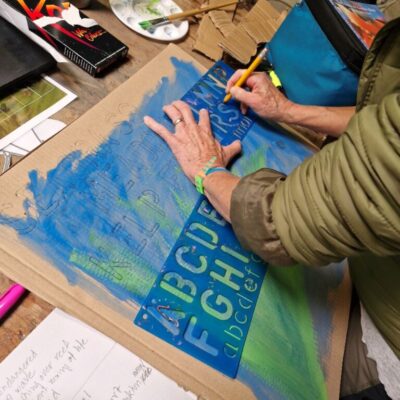
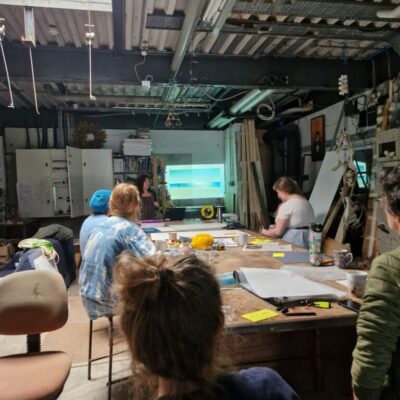
Bearing Witness was a powerful project, exploring the environmental and cultural impact of the proposed offshore wind farm at Sceirde Rocks, Connemara.
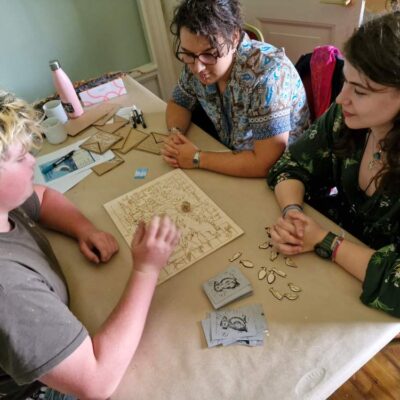
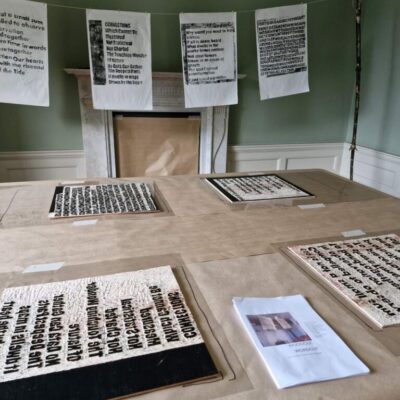
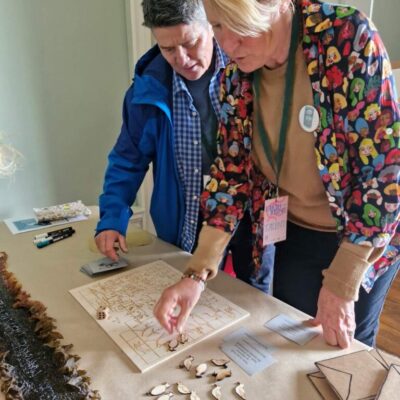
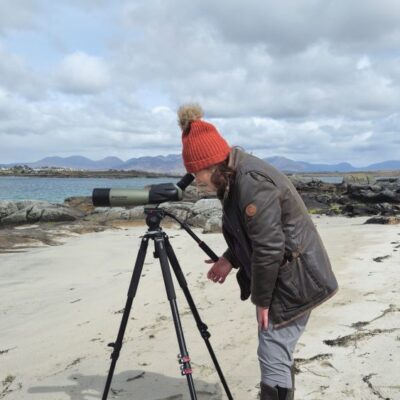
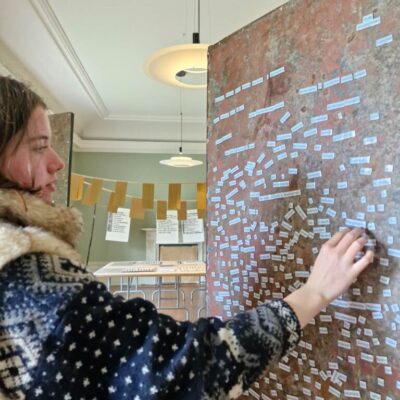
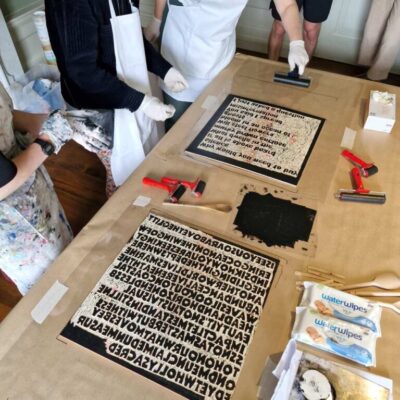
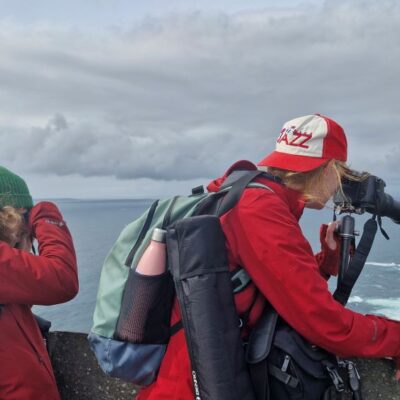
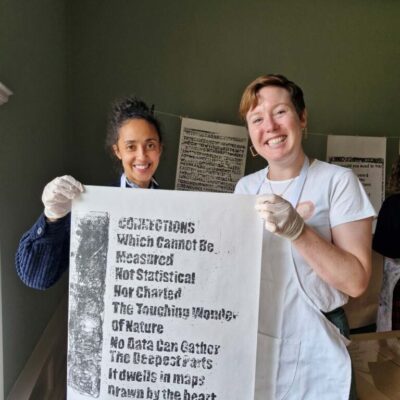
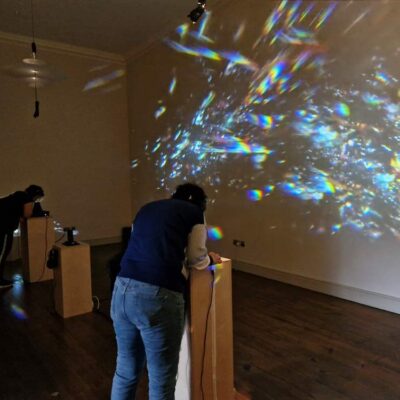
It included immersive sound and light installations, participatory workshops, and seabird mapping, working with our communities and inviting audiences to engage with the delicate balance between renewable energy and marine biodiversity. Visitors interacted with a tactile, immersive installation to activate recordings of seabird calls, explore migration paths, and print woodcut stories based on local folklore.
The project celebrated the unique richness of Ireland’s marine ecosystems—true jewels of its biodiversity. At the same time, it critically examined the industrialisation of our seas. We aimed to amplify the voices of our neglected coastal communities, and to encourage a national conversation about sustainable climate action that protects both ecosystems and cultural heritage.
IMMA’s artistic director Annie Fletcher wrote:
“This project embodies the kind of thoughtful and nuanced approach we need when addressing the climate and biodiversity crisis. It will bring the voices of Ireland’s coastal communities into the heart of IMMA, underscoring the importance of listening to local knowledge and lived experience.”
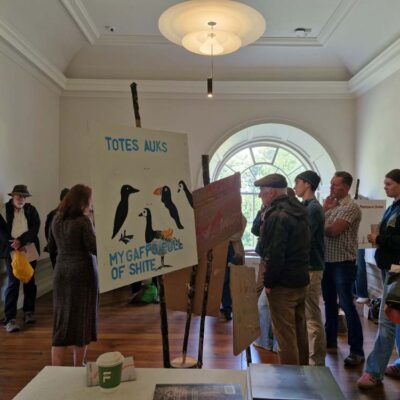
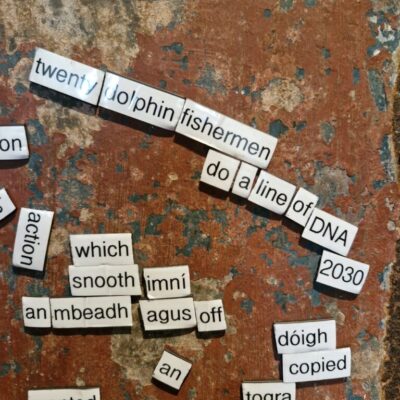
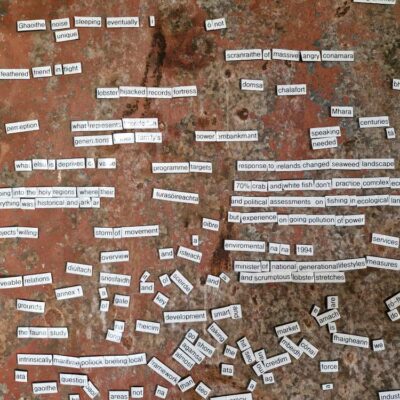
As one of only 4 projects selected through open call for IMMA’s Earth Rising 2025, we engaged with our communities in the making of protest banners, and in gathering material for our exhibition. We welcomed large numbers of visitors to our exhibition. Marie Louise Heffernan spoke about endangered bird species, Laney Mannion engaged audiences through her Sticky Narratives word play and printing workshops and Jane Cassidy's immersive installation gave people time to connect with this most beautiful, sensitive marine ecosystem.